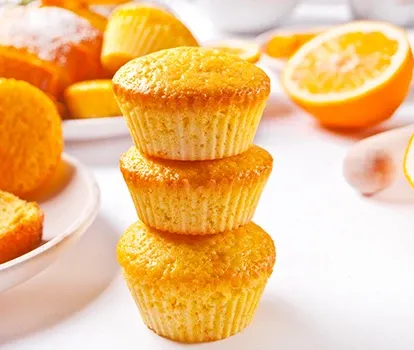
Yellow is one of the most familiar food shades, yet it can be surprisingly difficult to standardize across products. A cookie dough, cheese filling, soup base, and dry seasoning do not expose pigments to the same water activity, fat level, heat, or background color.
A shade that performs well in one formula may therefore look weak or too warm in another. Product developers save time when they treat yellow as an application problem rather than assuming one dosage will travel unchanged from recipe to recipe.
Start With the Finished Shade Reference
Teams often begin by choosing an ingredient before agreeing on the visual target. That reverses the process. First decide whether the product should look lemon-yellow, golden, buttery, or closer to yellow-orange, and compare samples under consistent lighting.
The base formula matters as well. Flour, egg, dairy solids, spices, and cooked starches all contribute their own color. A reference made in water cannot show how a pigment will look after it is layered over those ingredients.
Annatto Can Behave Differently Across Matrices
An annatto food color may suit a range of bakery or savory systems, but its format should match the product. Oil-dispersible and water-dispersible forms are not interchangeable, and emulsified versions may be designed for different manufacturing needs.
A high-fat filling can distribute pigment differently from a lean dough. In soups or sauces, the sequence of oil and water addition can matter too. Understanding where the pigment should reside helps prevent speckling, uneven shade, or color rings at the surface.
Heat Is Not One Single Stress
Baking for twenty minutes is different from a brief hot-fill step or a long simmer. Time, temperature, oxygen exposure, and the food’s chemistry work together, so describing a process simply as “heated” does not give enough information for color selection.
Developers should run color trials through the full thermal profile. Check the product after cooling, not only when it leaves the oven or kettle. Browning reactions and moisture loss can make the final shade deeper even when the pigment itself has remained relatively stable.
Yellow Can Be Lost in a Dark Base
Whole-grain flours, cocoa traces, herbs, spices, or roasted ingredients can mask a clean yellow. When that happens, adding more yellow food coloring may eventually make the shade warmer without making it visibly brighter.
Sometimes the answer is to adjust the target or use a blend rather than force one pigment to overpower the recipe. A realistic color target should respect the natural appearance of the product, especially in formulations positioned around recognizable ingredients.
Dispersibility Is a Production Issue
In a lab, a technician can spend several minutes mixing a small sample until every streak disappears. A production line may not offer that luxury. Pigment format, pre-blending, shear, and order of addition should fit the equipment operators actually use.
Dry systems may benefit from pre-blending into a carrier, while liquid or emulsion systems need enough mixing to spread evenly without creating unnecessary air. The method should be written into the formula instructions so color consistency does not depend on one experienced operator.
Check the Product After Storage
Freshly baked or cooked samples often look stronger than products that have sat in clear packaging under light. Fat migration, oxidation, and normal ingredient changes can shift the visual balance over time, even if the pigment does not fail.
Keep samples from several pilot lots and compare them through the intended shelf life. Consistent photography or instrumental color measurements can make small shifts easier to spot. This is especially useful when the product will be sold in transparent packaging.
Build a Production Tolerance, Not a Single Perfect Sample
Commercial batches will never be identical to a carefully prepared laboratory jar. Raw materials vary, mixing time moves slightly, and cooking conditions can drift within normal limits. The color specification should allow a realistic window while still protecting brand appearance.
Teams can define that window with retained standards, photographs, or instrumental color values. Operators then have a practical reference for deciding whether a batch is acceptable instead of trying to reproduce one ideal sample under every condition.
Conclusion
Yellow formulation is less about finding a universal pigment and more about matching shade, solubility, process, and base ingredients. Bakery and savory foods create different stresses, so each application needs its own test plan.
Manufacturers can review natural color options and technical support at foodrgb.com. A few well-designed trials in the real formula can prevent over-dosing, uneven dispersion, and late-stage shade corrections when production is already scheduled.